Top Ten Hedera Hashgraph Predictions for 2026: Real World Assets, Stablecoins, Hybrid Networks and More
Hedera Hashgraph ended 2025 on a positive note. The network graduated from experimental work and found real adoption in finance, supply chains, climate reporting and artificial intelligence. In a December 2025 message, Hedera’s leadership said the past year was about maturing and the coming year should be about meaningful acceleration. Institutions are choosing Hedera because its consensus algorithm orders transactions fairly, fees are predictable and services like the Hedera Token Service and Hedera Consensus Service are modular. These ten themes will likely guide Hedera’s progress in 2026.
1. Real world asset tokenization grows
In 2025 Hedera showed that tokenization is no longer just a test. Lloyds Banking Group and Aberdeen tokenized units of a money market fund and U.K. government bonds to use as collateral in foreign exchange trades. The Canary HBR exchange‑traded fund, built with Archax, began trading on Nasdaq Dubai. Hedera’s Asset Tokenization Studio added support for Tokeny’s ERC 3643 “T R E X” standard, enabling regulated securities to be issued on Hedera. Swarm tokenized shares of Apple, Tesla and gold. StegX tokenized more than one hundred million dollars in institutional real estate, and the HBAR Foundation invested in Archax’s tokenized version of Fidelity’s U.S. dollar money market fund. Red Swan tokenized over five billion dollars in commercial real estate and Diamond Standard tokenized collections of diamonds. These achievements suggest that 2026 could bring even larger issues such as government bonds or insurance policies. With predictable fees and fair ordering, Hedera is positioned to attract more institutional issuers.
2. Growth of stablecoins and central bank digital currencies
Stablecoins lay the groundwork for on chain finance. Hedera launched the Australian Digital Dollar through its Stablecoin Studio and welcomed the migration of USDC. Banks including Shinhan and Standard Bank tested remittances with stablecoins using the Hedera Token Service. Australia’s central bank also experimented with a wholesale central bank digital currency through Project Acacia. In 2026 more regional banks could issue their own stablecoins on Hedera and join regulated decentralised finance markets. Pilot projects for central bank digital currencies might become operational if regulators are satisfied with Hedera’s controls and audit capabilities.
3. Adoption of hybrid networks and HashSphere
Many enterprises need the openness of a public ledger and the privacy of a private network. Hedera’s HashSphere allows permissioned networks to anchor transactions on Hedera for final settlement while keeping data private. In 2025, the Digital Receipt System created with the Qatar Financial Centre used HashSphere to produce Shariah compliant digital receipts. Australia’s central bank also tested wholesale central bank digital currency through Project Acacia. We expect more consortia in supply chains, banking and energy to adopt HashSphere or similar solutions in 2026. Sectors such as health care and insurance may use private EVM chains connected to Hedera for tamper‑proof proofs.
4. Verifiable artificial intelligence and decentralized computing
Artificial intelligence requires audit trails. Hedera launched AI Studio and joined the Decentralized AI Society. EQTY Lab created a verifiable compute platform using Nvidia Blackwell chips and anchored logs of AI computations on Hedera. The Hedera Foundation worked with Equity Labs to record AI agent decisions on the network. In 2026 verifiable artificial intelligence may become a signature use case. Companies will demand proof for autonomous agents and regulators might request audit logs for AI models in finance and health care. Hedera could become the trust layer for AI governance because its consensus service offers finality and fairness at a low cost.
5. Growth of carbon markets and environmental reporting
Use cases in environmental social governance flourished on Hedera in 2025. Blockchain for Energy’s Guardian system logged oil field emissions and Hyundai and Kia used carbon transparency tools in manufacturing. B4E and Verra built a digital measurement, reporting and verification platform for carbon offsets. Hyundai Motor Group tracked its carbon footprint and the DOVU platform expanded its climate data offering. In 2026 carbon tokenization such as carbon credits and renewable energy certificates, may grow and Hedera’s Guardian may integrate with more registries. Supply chains could embed environmental data throughout the production process.
6. Decentralized finance with predictable costs and institutional features
By 2025 Hedera’s decentralised finance ecosystem had matured thanks to predictable low costs, fair transaction ordering and compatibility with the EVM. Stablecoins and real world assets enabled lending, borrowing, decentralized exchanges, yield farming and derivatives. Important milestones were the deployment of USDC and AUDD, cross‑border remittance tests by Shinhan Bank, Standard Bank and SCB TechX and the launch of a DeFi incubator and developer tools such as Contract Builder and Developer Playground hedera.com. In 2026 we expect more permissioned liquidity pools, regulated derivatives and integration with tokenized treasury bills. The mix of real world assets and predictable costs may attract institutions that have avoided other chains due to volatility and front running.
7. Governance and ecosystem changes
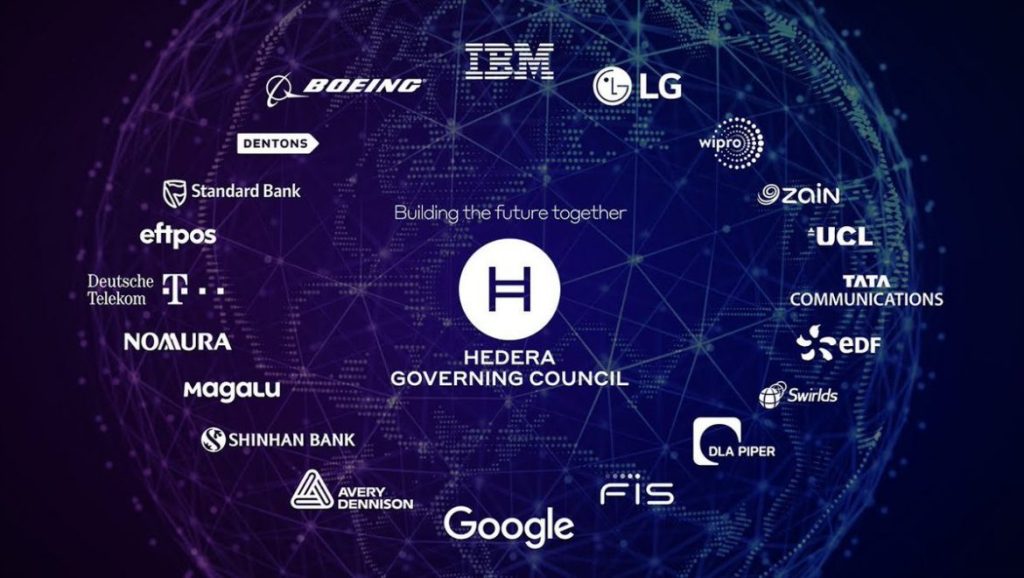
In 2025 the HBAR Foundation became the Hedera Foundation with a focus on tokenization, decentralized finance, artificial intelligence and community innovation. The Hedera Governing Council was renamed the Hedera Council. Tom Sylvester became president and Mance Harmon took the role of chair. New members such as Arrow Electronics, Blockchain for Energy and Repsol joined, and the Hedera Enterprise Adoption Team was established to help projects move from proofs of concept to production. With a more agile governance structure, Hedera may expand its council into telecommunications, pharmaceuticals or government agencies and encourage more community votes on network upgrades.
8. Decentralized identity and data integrity
Hedera’s trust layer is valuable for digital identity, the Internet of Things and supply chain data. Earth ID uses Hedera for decentralized identity solutions, while Neuron enables machine to machine micropayments for connected devices. Hedera’s Guardian system stores verifiable credentials and tamper‑proof logs for emissions data. Hedera is also integrated with Chainlink for secure data feeds and cross chain messaging. In 2026 more governments and companies may issue verifiable credentials on Hedera for customer verification, medical records or academic certificates. Supply chains could adopt digital receipts and tamper evident logs to ensure provenance.
9. Developer tools and community growth
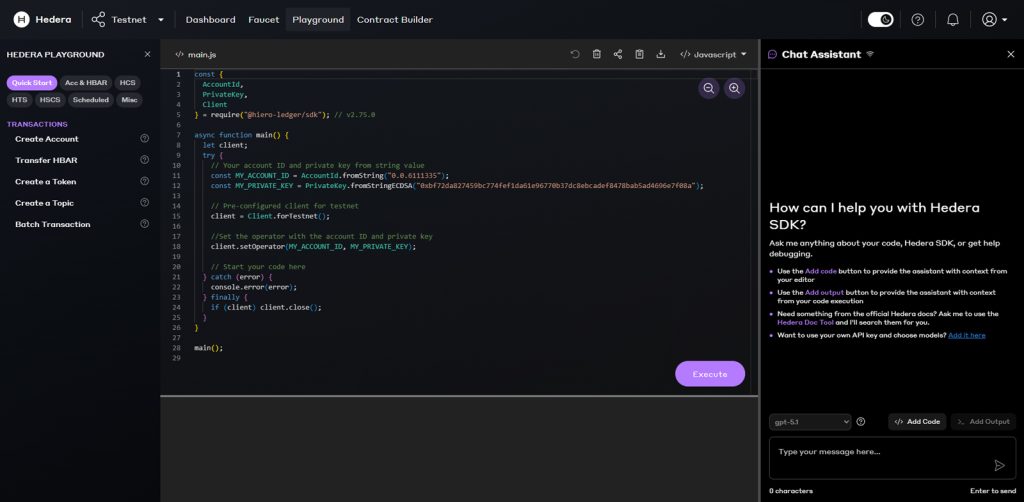
To attract developers, Hedera invested in tools. The Developer Playground and Contract Builder allow programmers to experiment with smart contracts before deploying them to the main network hedera.com. Hedera’s network won awards for best Web3 developer tools and launched open source kits for artificial intelligence and tokenization hedera.com. The Hedera Foundation also introduced new challenge programs for decentralized finance and artificial intelligence. Looking ahead, we may see multi language software development kits, better debugging tools for the EVM and deeper integration with frameworks such as Hardhat and Foundry. Education programs could reach emerging markets.
10. Market outlook and HBAR price
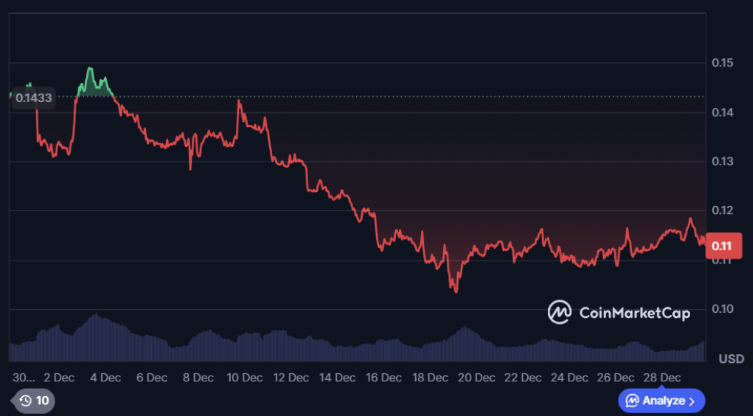
Despite technological progress, HBAR’s price fell about seventy one percent in 2025. Long term investors continued regular purchases in anticipation of future adoption. The 2026 price will depend on economic conditions and how much tokenization, stablecoins and artificial intelligence activity increases network usage and staking demand. Some analysts think HBAR could benefit from more real world asset issues and cross border stablecoin flows. Others warn the token may remain volatile until network revenue flows to stakers. As always, investors should consider their own risk tolerance.
Hedera Hashgraph demonstrated in 2025 that it can support real world finance, verifiable artificial intelligence and environmental reporting. With governance reforms, enterprise support teams and improved developer tools, the network is ready to accelerate in 2026. We expect more real world asset tokenization, wider use of stablecoins and central bank digital currencies, and new hybrid networks connecting public and private data. Hedera’s focus on fairness, sustainability and regulation could make it a foundational layer for the digital economy.